Nonsense!
Despite this essay’s title, objective proof that God exists does not exist. Honest believers will admit that faith in God produces its own proof. Nonbelievers have no faith, so they are incapable of perceiving what faith makes obvious to believers. However, while those who have faith can never be truly objective about the object of
their faith, they can, by careful avoidance of cliché arguments, participate in a reasonable discussion of the issues surrounding it.
Definitions
Cosmologists and physicists, as well as us normal folks, stand in two theological camps: Theistic, and atheistic. Yes, theistic scientists actually exist, though their atheistic colleagues seem the more vocal of the two. Both theistic and atheistic scientists recognize the universe’s delicate balance. What they do not agree upon is the existence of a supernatural or spiritual component in the universe. As neither side has any way of
“proving” their position empirically, we must call it a presupposition, or worldview.
Theism covers a wide range of,
primarily monotheistic, religions that have evolved through attempts to explain the material universe’s cause, either by a personal Supreme Being or by an impersonal, Causative Force. Atheism theorizes a variety of cosmic-scale, spontaneously generative events, with either a natural but unknown cause, or no cause at all.
Differentiation
Two foundational categories of
differences exist between theistic and atheistic ideologies: The first lies in their positive or negative experiences with, or observations of, religion. The second lies in their relative willingness to accept the existence of entities that scientific
inquiry cannot detect.
My mother was a “Type One”
atheist, at least partially because of an uncle who was a Methodist deacon and “enjoyed” bouncing her on his lap in a way that gave her the creeps. Her mother refused to believe her complaints. Then she converted to Romanism so she could marry my father, and a new series of questionable experiences began. To my knowledge she never managed to disassociate the religion of Christianity from the personal Christ.
Most atheists like to view themselves as the “Type Two” variety, generally skeptical about “the god thing,” and especially religion. Many of these folks are perfectly sincere in their non-belief on ideological grounds. Either they invest their confidence in “Science,” or they simply refuse to be persuaded by a belief-system they don’t understand.
Theism is an extremely broad brush that attempts to cover many different philosophies, theologies and religions, bound loosely by the common acceptance of one or more supernatural, or spiritual, supreme beings. While theism’s greatest strength is its diverse appeal, atheists see that lack of unity as one of its greatest credibility gaps. Reasonably, atheists ask, “Why would a sentient, intelligent supreme being who is capable of communicating with its subjects, not tell everyone the same thing about itself?”
Of course, they've answered their own question: “Either no such supreme being exists, or it’s playing cruel games with its subjects.” What, no third option?
Other
Options
To assume that humans can be privy to all knowledge and understanding, accountable to no one and absolutely sovereign, is to elevate those select folks to godhood. Of course, those who possess such esoteric knowledge must impose their rule over the rest of us, as we aren’t bright enough to rule ourselves.
Absurd? What other ultimate conclusion can come from believing that humans are equipped to observe and understand all that exists? Is it not possible that such marvelous knowledge is beyond our finite imaginations and scientific state of art?
Not long ago, cosmologists and
physicists discovered something missing in the universe. They knew it must be there because the universe wouldn’t work without it. For lack of a better name, they called this theoretical necessity, “Dark Energy,” because they had no way of seeing it, and even now they can only detect it indirectly. Then of course, since energy and
matter are just alternate states of the same thing, they coined the term, “Dark Matter” to go along with it.
Since they are certain that nothing of a supernatural or spiritual nature can exist, as Science would have surely seen it by now if it did, relating that theoretical, cosmic necessity to “God” is out of the question. Is a measure of theophobia at work among Big Brains in academia? Why else would such brilliant scientific minds deny that something exists, whose existence cannot be scientifically proved or disproved?
Conclusion
Does God exist? The debate has
persisted over the centuries, both sides “proving” their arguments in their own eyes with little impact on the opposition. Yes, theists have become atheists, and vice versa, but those changes have nothing to do with the debate. It’s all about disillusionment and enlightenment.
Despite the complete certainty both sides maintain, one ultimate truth stands: Death will decide the issue. If atheists are right, what a hollow victory that will be, as in their oblivion they will know nothing. But if God exists as he said in his word, the Bible, believers will rejoice in unison at their faith's fulfillment, while tragically, nonbelievers will learn of their error the hard way.
Thursday, September 27, 2012


Saturday, September 22, 2012
Matthew 12:1-8; Lord of the Sabbath
Matthew 12:1-8 ESV
(1) At that time Jesus went through the grainfields on the Sabbath. His disciples were hungry, and they began to pluck heads of grain and to eat.
(2) But when the Pharisees saw it, they said to him, "Look, your disciples are doing what is not lawful to do on the Sabbath."
(3) He said to them, "Have you not read what David did when he was hungry, and those who were with him:
(4) how he entered the house of God and ate the bread of the Presence, which it was not lawful for him to eat nor for those who were with him, but only for the priests?
(5) Or have you not read in the Law how on the Sabbath the priests in the temple profane the Sabbath and are guiltless?
(6) I tell you, something greater than the temple is here.
(7) And if you had known what this means, 'I desire mercy, and not sacrifice,' you would not have condemned the guiltless.
(8) For the Son of Man is lord of the Sabbath."
This is a standard proof-passage for those who defend worshiping on the Lord’s Day, rather than on the seventh-day Sabbath. The argument goes, “They did it, so we can do it too.” Of course, Sabbatarians counter with their two standard arguments: First, that God instituted seventh-day Sabbath observance the day after he finished creating the universe, so it’s not part of the ceremonial law that Jesus fulfilled. Second, that Jesus never rescinded seventh-day Sabbath observance, so it still applies to us. And the debate continues ad nauseam.
Any conscientious debate judge would, at this point, award victory to the Sabbatarians, as the Lord’s Day proponents’ argument is pathetically weak—so far—but let’s reexamine the above Scripture passage.
In verse four, Jesus cites the historical precedent of King David breaking a ceremonial law for expediency’s sake. Then, in verse five, Jesus gave ceremonial law precedence over Sabbath law. So, on two counts, Jesus negated the primary, seventh-day Sabbatarian argument.
Verse six establishes Jesus’ superiority over the temple, and thus, over all ceremonial observations related to it. Since verses four and five establish a higher priority for ceremonial law over Sabbath law, seventh-day Sabbath comes in dead last.
In verse seven, Jesus stresses love over law by quoting from the Old Testament: For I desire steadfast love and not sacrifice, the knowledge of God rather than burnt offerings. (Hosea 6:6 ESV) Thus, the King of kings declared his disciples not guilty of breaking the Sabbath, and by extension, we are not guilty of breaking the Sabbath by worshiping on the Lord’s Day.
Verse eight caps off Jesus’ Sabbath teaching by declaring himself, Lord of the Sabbath. In other words, “Look, people, when I talk about the Sabbath, you can take it to the bank.”
In their letters to the churches, Jesus’ apostles had to deal repeatedly with Judaizers. Apparently, seventh-day Sabbath advocates felt the need to snip a bit out of the New Testament.
Discussion Questions
- What do you think of using Bible verses and passages to prove religious teachings?
- What do you think of debating other Christians about differences in teachings?
- What is wrong with celebrating corporate worship on Saturday?
- How does King David’s experience apply to the situation Jesus faced in the story?
- What does “Sabbath” mean?
- On what basis does Jesus claim to be Lord of the Sabbath?
- Why is the general Sunday Sabbath argument, given in the presentation, so lame?
- Who were the “Judaizers,” and what did they teach?
- Why did the letter-writing apostles come down so hard on the Judaizers?
- What does our liberty in Christ mean to you?
Luke 9:18-27--Fan or Follower?
Luke 9:18 (ESV) Now it happened that as he was praying alone, the disciples were with him. And he asked them, "Who do the crowds say that I am?"
Jesus actually asked after the rumors concerning him. The implication of his question was that the common people were a bunch of crowd-followers who had no idea as to the truth of who he really was and didn’t really care. On a number of occasions he pegged them as opportunists, tagging along because they wanted a free lunch.
Today’s churches are filled with those who want the respectability of religious association, social and business networking, the power of a big spoke in a small wheel, or even some vague notion that religion will make them good enough for, “The Man Upstairs.” Seeking these church perks is no less opportunistic than joining the crowds following Jesus, hoping to fill their bellies.
The New Testament tells of Jesus-fans who spread their cloaks and palm fronds on the road into Jerusalem and cried, “Hosanna to the Son of David,” but later demanded his crucifixion. Today’s church too often models its behavior after those crowds by raising our hands and joyfully singing praise choruses in church, but denying Jesus with our gossip, hateful attitudes, and worldly entertainments and excesses. Self-centered expectations kill our marriages and embitter our children, dooming them to a life of cynicism and unbelief because they don’t know what to believe.
Verses 19-22 don't directly apply to this study, so I'll leave them for another time.
Luke 9:23 (ESV) And he said to all, "If anyone would come after me, let him deny himself and take up his cross daily and follow me.”
What a contrast with our religious carnality, yet this is Jesus’ standard for discipleship. What does taking up our cross mean? By Galatians 3:13 we see that Jesus’ cross was his curse: Christ redeemed us from the curse of the law by becoming a curse for us--for it is written, "Cursed is everyone who is hanged on a tree." (quoted from Deuteronomy 21:23) So we might conclude that he meant, Take up your curse and follow me, but for the fact that only Jesus could do that.
So, what else was the cross to Jesus? It was the means by which he was put to death. Apostle Paul explained in Romans chapter 6, the role of death in our redemption:
Romans 6:3-8 (ESV) Do you not know that all of us who have been baptized into Christ Jesus were baptized into his death? (4) We were buried therefore with him by baptism into death, in order that, just as Christ was raised from the dead by the glory of the Father, we too might walk in newness of life. (5) For if we have been united with him in a death like his, we shall certainly be united with him in a resurrection like his. (6) We know that our old self was crucified with him in order that the body of sin might be brought to nothing, so that we would no longer be enslaved to sin. (7) For one who has died has been set free from sin. (8) Now if we have died with Christ, we believe that we will also live with him.
Jesus may as well have said, Take up your death and follow me.
Luke 9:24 (ESV) For whoever would save his life will lose it, but whoever loses his life for my sake will save it.
More death, but not in the sense that we normally think of it. Death carries a morbid stigma because of the coldness and corruption of the flesh that we associate with it. Jesus’ death, however, involves none of that. King David prophesied about Jesus’ death in Psalms 16:9-10 (ESV) Therefore my heart is glad, and my whole being rejoices; my flesh also dwells secure. (10) For you will not abandon my soul to Sheol, or let your holy one see corruption. So in Jesus, death is not ugly, but a beautiful thing, unless, of course, we value our own mortal lives higher than the eternal life we have in him.
Luke 9:25 (ESV) For what does it profit a man if he gains the whole world and loses or forfeits himself?
Obviously, the correct answer to this question is, “Nothing!” Problem is, the world is so seductive to us that it blinds us to what we know is the truth. And speaking of seductive things, Satan’s lies, cloaked in partial truths, lead us gleefully into his pit of perdition. Apostle Paul dealt with one such lie. What shall we say then? Are we to continue in sin that grace may abound? By no means! How can we who died to sin still live in it? (Romans 6:1-2 ESV)
What a popular lie! Only we don’t think of it in exactly those terms. We think, “Oh, I can’t help my compulsions. Anyway, that’s what grace is for; God’ll forgive me for this little thing.”
Another of Apostle Paul’s Spirit-led insights smashed that “reasoning” to bits. Galatians 6:7-8 (ESV) Do not be deceived: God is not mocked, for whatever one sows, that will he also reap. (8) For the one who sows to his own flesh will from the flesh reap corruption, but the one who sows to the Spirit will from the Spirit reap eternal life.
Luke 9:26 (ESV) For whoever is ashamed of me and of my words, of him will the Son of Man be ashamed when he comes in his glory and the glory of the Father and of the holy angels.
This pretty much speaks for itself.
The big question is, “Do I want to be a Jesus-fan, or a Jesus-follower?” One is easy. The other is hard. One costs more than you can imagine. The other pays eternal dividends.
Discussion Questions
- In Luke 9:18, why did Jesus ask what the crowds were saying about him? He already knew the answer, so what point was he trying to make with his disciples?
- We’ve all heard the expression, “It’s my cross to bear.” How does that compare with Jesus’ statement in verse 23?
- In view of Galatians 3:13, why can’t the cross Jesus calls us to bear daily be a curse, as it was for him?
- How do you feel about death?
- People are willing to sacrifice their eternal spirit for a lot less than the whole world. Can you think of anything you could gain that would be worth losing your soul?
- What does being ashamed of Jesus and his words look like?
Sunday, September 16, 2012

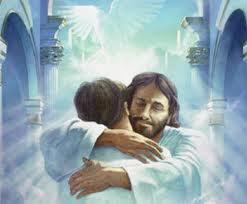
Rest, Assured
This morning’s Daily Manna From The Net
is Matthew 11:28-30 (NASB) “Come
to Me, all who are weary and heavy-laden, and I will give you rest.
Take My yoke upon you and learn from Me, for I am gentle and humble
in heart, and you will find rest for your souls. For My yoke is easy
and My burden is light.”
What
a beautiful promise; all of us are in some way weary and heavily
burdened, and need Jesus’ rest. His yoke is His perfect law of
liberty, and by obeying it, we too will become gentle and
humble in heart as we find rest for our souls. This is the simplest
formula of all for a godly, happy life.
Saturday, September 15, 2012
CLOROX
Some people keep their domicile scrupulously clean. One will never enter their home, only to discover dust atop the china cabinet or have some offensive odor assault his senses.
But then there are those people whose homes one must simply never enter at all. Their living space needs a thorough cleaning from top to bottom before those of us with sensibilities would even consider visiting.
Too often, however, the most persistent offenses are found in ones Church home, and even a thorough dousing with Clorox cannot eradicate that kind of nastiness. Christ’s Apostle Paul wrote in chapter five of his letter to the Galatian church:
Now
the actions of the flesh are obvious: sexual immorality, impurity,
promiscuity, idolatry,
witchcraft,
hatred,
rivalry, jealously, outbursts of anger, quarrels, conflicts,
factions, envy,
murder, drunkenness, wild partying, and things like that. I am
telling you now, as I have told you in the past, that people who
practice such things will not inherit the kingdom of God.
Of
course, your
congregation would never be guilty of the really bad stuff, but what
about the attitudinal sins, like rivalry,
jealousy, quarrels, conflicts, factions and
envy?
While no self-respecting church would advertise such things, the
“saints” too easily find themselves consumed by the carnal
nature’s power struggles.You say your church never falls into such sins of attitude? Paul added one more offense to the list in 1 Timothy 5:13b Not only this, but they even become gossips and keep busy by interfering in other people's lives, saying things they should not say. Now what honest gossip would admit to such a thing? To clear up the subject just a bit, let’s take a little quiz:
- Do we share our speculations about others’ motives?
- Do we ever participate church leadership roasts?
- Do we encourage friends to share tidbits of information about others?
- Are we that friend, volunteering information about others?
Then there’s good old Colossians 3:8 But now you must also get rid of anger, wrath, malice, slander, obscene speech, and all such sins. Of course, we church folks would never do such things. Right? In case anyone wants further Scriptural commentary on attitudinal sins, Mark 7:22, Matthew 15:19, Ephesians 4:31, 1 Peter 2:1, James 4:11, and Titus 3:2 get pretty explicit about them. While these aren’t the obvious sins of the flesh, such as listed in 1 Timothy 1:9-11, they are still the product of our carnal nature that is supposed to have been crucified with Christ. Perhaps you think sins of the tongue are no big deal? If anyone thinks he is religious and does not bridle his tongue but deceives his heart, this person's religion is worthless. (James 1:26 ESV)
Philippians
2:3-4 ESV
(3)
Do nothing from selfish ambition or conceit, but in humility count
others more significant than yourselves.
(4) Let each of you look not only to his own interests, but also to the interests of others.
(4) Let each of you look not only to his own interests, but also to the interests of others.
Philippians
2:14 ESV
(14) Do all things without grumbling or disputing,
(14) Do all things without grumbling or disputing,
Is getting our own way worth the dirt we smear on our Savior’s name? Not even a boatload of Clorox will clean that kind of filth.
Thursday, September 13, 2012
The Wild-Eyed Preacher
A character that movie producers love to use as either a foil against the protagonists, or comic relief, is the wild-eyed, hell-fire and damnation preacher. Typically he is unkempt, wears a clerical collar and long, black suit coat, wields his oversize Bible like a club, and spits Old Testament curses with sinister fluency. If you’re a typical movie-goer, he’s the character you love to hate, along with his message of judgment and despair.
Today’s church world reacts to that stereotype by making the New Testament God as different as possible from that Old Testament God of judgment and wrath. To hear them tell it, God has either grown up, or he’s been through anger management therapy until he’s all niceness and light. Grace is the twenty-first century rule, as he is now loath to offend anyone. And of course, our God of love and grace would never condemn nice folks to That Other Place. Why, even if we were sinners, we’d be okay because Jesus came to save that which was lost.
Today’s gospel says, “Relax. Just do what seems right, be a nice guy or gal and don’t hurt anybody too badly, and our loving God will personally welcome us into eternal bliss.” The Old Testament seems to confirm all this New Testament wonderfulness in first part of Deuteronomy 28:
Deuteronomy
28:1-14 ESV
(1)
"And if you faithfully obey the voice of the LORD your God,
being careful to do all his commandments that I command you today,
the LORD your God will set you high above all the nations of the
earth.
(2)
And all these blessings shall come upon you and overtake you, if you
obey the voice of the LORD your God.
(3)
Blessed shall you be in the city, and blessed shall you be in the
field.
(4)
Blessed shall be the fruit of your womb and the fruit of your ground
and the fruit of your cattle, the increase of your herds and the
young of your flock.
(5)
Blessed shall be your basket and your kneading bowl.
(6)
Blessed shall you be when you come in, and blessed shall you be when
you go out.
(7)
"The LORD will cause your enemies who rise against you to be
defeated before you. They shall come out against you one way and flee
before you seven ways.
(8)
The LORD will command the blessing on you in your barns and in all
that you undertake. And he will bless you in the land that the LORD
your God is giving you.
(9)
The LORD will establish you as a people holy to himself, as he has
sworn to you, if you keep the commandments of the LORD your God and
walk in his ways.
(10)
And all the peoples of the earth shall see that you are called by
the name of the LORD, and they shall be afraid of you.
(11)
And the LORD will make you abound in prosperity, in the fruit of
your womb and in the fruit of your livestock and in the fruit of your
ground, within the land that the LORD swore to your fathers to give
you.
(12)
The LORD will open to you his good treasury, the heavens, to give
the rain to your land in its season and to bless all the work of your
hands. And you shall lend to many nations, but you shall not borrow.
(13)
And the LORD will make you the head and not the tail, and you shall
only go up and not down, if you obey the commandments of the LORD
your God, which I command you today, being careful to do them,
(14)
and if you do not turn aside from any of the words that I command
you today, to the right hand or to the left, to go after other gods
to serve them.
Deuteronomy
28:15-68 ESV
(15)
"But if you will not obey the voice of the LORD your God or be
careful to do all his commandments and his statutes that I command
you today, then all these curses shall come upon you and overtake
you.
(16)
Cursed shall you be in the city, and cursed shall you be in the
field.
(17)
Cursed shall be your basket and your kneading bowl.
(18)
Cursed shall be the fruit of your womb and the fruit of your ground,
the increase of your herds and the young of your flock.
(19)
Cursed shall you be when you come in, and cursed shall you be when
you go out.
(20)
"The LORD will send on you curses, confusion, and frustration
in all that you undertake to do, until you are destroyed and perish
quickly on account of the evil of your deeds, because you have
forsaken me.
(21)
The LORD will make the pestilence stick to you until he has consumed
you off the land that you are entering to take possession of it.
(22)
The LORD will strike you with wasting disease and with fever,
inflammation and fiery heat, and with drought and with blight and
with mildew. They shall pursue you until you perish.
(23)
And the heavens over your head shall be bronze, and the earth under
you shall be iron.
(24)
The LORD will make the rain of your land powder. From heaven dust
shall come down on you until you are destroyed.
(25)
"The LORD will cause you to be defeated before your enemies.
You shall go out one way against them and flee seven ways before
them. And you shall be a horror to all the kingdoms of the earth.
(26)
And your dead body shall be food for all birds of the air and for
the beasts of the earth, and there shall be no one to frighten them
away.
(27)
The LORD will strike you with the boils of Egypt, and with tumors
and scabs and itch, of which you cannot be healed.
(28)
The LORD will strike you with madness and blindness and confusion of
mind,
(29)
and you shall grope at noonday, as the blind grope in darkness, and
you shall not prosper in your ways. And you shall be only oppressed
and robbed continually, and there shall be no one to help you.
(30)
You shall betroth a wife, but another man shall ravish her. You
shall build a house, but you shall not dwell in it. You shall plant a
vineyard, but you shall not enjoy its fruit.
(31)
Your ox shall be slaughtered before your eyes, but you shall not eat
any of it. Your donkey shall be seized before your face, but shall
not be restored to you. Your sheep shall be given to your enemies,
but there shall be no one to help you.
(32)
Your sons and your daughters shall be given to another people, while
your eyes look on and fail with longing for them all day long, but
you shall be helpless.
(33)
A nation that you have not known shall eat up the fruit of your
ground and of all your labors, and you shall be only oppressed and
crushed continually,
(34)
so that you are driven mad by the sights that your eyes see.
(35)
The LORD will strike you on the knees and on the legs with grievous
boils of which you cannot be healed, from the sole of your foot to
the crown of your head.
(36)
"The LORD will bring you and your king whom you set over you to
a nation that neither you nor your fathers have known. And there you
shall serve other gods of wood and stone.
(37)
And you shall become a horror, a proverb, and a byword among all the
peoples where the LORD will lead you away.
(38)
You shall carry much seed into the field and shall gather in little,
for the locust shall consume it.
(39)
You shall plant vineyards and dress them, but you shall neither
drink of the wine nor gather the grapes, for the worm shall eat them.
(40)
You shall have olive trees throughout all your territory, but you
shall not anoint yourself with the oil, for your olives shall drop
off.
(41)
You shall father sons and daughters, but they shall not be yours,
for they shall go into captivity.
(42)
The cricket shall possess all your trees and the fruit of your
ground.
(43)
The sojourner who is among you shall rise higher and higher above
you, and you shall come down lower and lower.
(44)
He shall lend to you, and you shall not lend to him. He shall be the
head, and you shall be the tail.
(45)
"All these curses shall come upon you and pursue you and
overtake you till you are destroyed, because you did not obey the
voice of the LORD your God, to keep his commandments and his statutes
that he commanded you.
(46)
They shall be a sign and a wonder against you and your offspring
forever.
(47)
Because you did not serve the LORD your God with joyfulness and
gladness of heart, because of the abundance of all things,
(48)
therefore you shall serve your enemies whom the LORD will send
against you, in hunger and thirst, in nakedness, and lacking
everything. And he will put a yoke of iron on your neck until he has
destroyed you.
(49)
The LORD will bring a nation against you from far away, from the end
of the earth, swooping down like the eagle, a nation whose language
you do not understand,
(50)
a hard-faced nation who shall not respect the old or show mercy to
the young.
(51)
It shall eat the offspring of your cattle and the fruit of your
ground, until you are destroyed; it also shall not leave you grain,
wine, or oil, the increase of your herds or the young of your flock,
until they have caused you to perish.
(52)
"They shall besiege you in all your towns, until your high and
fortified walls, in which you trusted, come down throughout all your
land. And they shall besiege you in all your towns throughout all
your land, which the LORD your God has given you.
(53)
And you shall eat the fruit of your womb, the flesh of your sons and
daughters, whom the LORD your God has given you, in the siege and in
the distress with which your enemies shall distress you.
(54)
The man who is the most tender and refined among you will begrudge
food to his brother, to the wife he embraces, and to the last of the
children whom he has left,
(55)
so that he will not give to any of them any of the flesh of his
children whom he is eating, because he has nothing else left, in the
siege and in the distress with which your enemy shall distress you in
all your towns.
(56)
The most tender and refined woman among you, who would not venture
to set the sole of her foot on the ground because she is so delicate
and tender, will begrudge to the husband she embraces, to her son and
to her daughter,
(57)
her afterbirth that comes out from between her feet and her children
whom she bears, because lacking everything she will eat them
secretly, in the siege and in the distress with which your enemy
shall distress you in your towns.
(58)
"If you are not careful to do all the words of this law that
are written in this book, that you may fear this glorious and awesome
name, the LORD your God,
(59)
then the LORD will bring on you and your offspring extraordinary
afflictions, afflictions severe and lasting, and sicknesses grievous
and lasting.
(60)
And he will bring upon you again all the diseases of Egypt, of which
you were afraid, and they shall cling to you.
(61)
Every sickness also and every affliction that is not recorded in the
book of this law, the LORD will bring upon you, until you are
destroyed.
(62)
Whereas you were as numerous as the stars of heaven, you shall be
left few in number, because you did not obey the voice of the LORD
your God.
(63)
And as the LORD took delight in doing you good and multiplying you,
so the LORD will take delight in bringing ruin upon you and
destroying you. And you shall be plucked off the land that you are
entering to take possession of it.
(64)
"And the LORD will scatter you among all peoples, from one end
of the earth to the other, and there you shall serve other gods of
wood and stone, which neither you nor your fathers have known.
(65)
And among these nations you shall find no respite, and there shall
be no resting place for the sole of your foot, but the LORD will give
you there a trembling heart and failing eyes and a languishing soul.
(66)
Your life shall hang in doubt before you. Night and day you shall be
in dread and have no assurance of your life.
(67)
In the morning you shall say, 'If only it were evening!' and at
evening you shall say, 'If only it were morning!' because of the
dread that your heart shall feel, and the sights that your eyes shall
see.
(68)
And the LORD will bring you back in ships to Egypt, a journey that I
promised that you should never make again; and there you shall offer
yourselves for sale to your enemies as male and female slaves, but
there will be no buyer."
The good news is, the New Testament law, the “Perfect Law of Liberty,” (James 1:25) is a whole lot simpler than the Old Testament law. Jesus first stated his New Testament law in Matthew’s gospel:
Matthew
19:16-21 ESV
(16)
And behold, a man came up to him, saying, "Teacher, what good
deed must I do to have eternal life?"
(17)
And he said to him, "Why do you ask me about what is good?
There is only one who is good. If you would enter life, keep the
commandments."
(18)
He said to him, "Which ones?" And Jesus said, "You
shall not murder, You shall not commit adultery, You shall not steal,
You shall not bear false witness,
(19)
Honor your father and mother, and, You shall love your neighbor as
yourself."
(20)
The young man said to him, "All these I have kept. What do I
still lack?"
(21) Jesus said to him, "If you would be perfect, go, sell what you possess and give to the poor, and you will have treasure in heaven; and come, follow me."
(21) Jesus said to him, "If you would be perfect, go, sell what you possess and give to the poor, and you will have treasure in heaven; and come, follow me."
Admittedly, Jesus was making a point that must be understood if we are to follow him, but that makes it no less binding. Jesus’ apostle Paul rephrased it into a pithy statement: For the whole law is fulfilled in one word: “You shall love your neighbor as yourself.” (Galatians 5:14 ESV) The quality of love the apostle specified is the same as in his first letter to the Corinthian church:
1 Corinthians 13:1-7 ESV
(1) If I speak in the tongues of men
and of angels, but have not love, I am a noisy gong or a clanging
cymbal.
(2) And if I have prophetic powers,
and understand all mysteries and all knowledge, and if I have all
faith, so as to remove mountains, but have not love, I am nothing.
(3) If I give away all I have, and
if I deliver up my body to be burned, but have not love, I gain
nothing.
(4) Love is patient and kind; love
does not envy or boast; it is not arrogant
(5) or rude. It does not insist on
its own way; it is not irritable or resentful;
(6) it does not rejoice at
wrongdoing, but rejoices with the truth.
(7) Love bears all things, believes
all things, hopes all things, endures all things.
That
should be easy enough, right? Exhibiting such traits as listed in
verses four through seven should be no problem at all, especially
with ones spouse, or kids, or parents, or neighbors, or coworkers,
right? That’s all Jesus is asking of his followers. Why, it’s
just a piece of cake, compared to the Old Testament law.For a little perspective on who’s who in God’s church, take another quick look at verses one through three. Are you well-spoken? Without love, you’re just a noise-maker. Are you a prophet, and have nearly infinite understanding and knowledge? Without love, you’re nothing, regardless of your position in the church, community or business.
Answering the inevitable question of whether a person who fails the love test can still be saved, let’s listen to Jesus’ best friend, the apostle John:
1
John 2:4-6 ESV
(4)
Whoever says "I know him" but does not keep his
commandments is a liar, and the truth is not in him,
(5)
but whoever keeps his word, in him truly the love of God is
perfected. By this we may know that we are in him:
(6)
whoever says he abides in him ought to walk in the same way in which
he walked.
1
John 3:10 ESV
(10) By this it is evident who are the children of God, and who are the children of the devil: whoever does not practice righteousness is not of God, nor is the one who does not love his brother.
1 John 3:17 ESV
(17) But if anyone has the world's goods and sees his brother in need, yet closes his heart against him, how does God's love abide in him?
1 John 4:7-8 ESV
(7) Beloved, let us love one another, for love is from God, and whoever loves has been born of God and knows God.
(8) Anyone who does not love does not know God, because God is love.
1 John 4:19-21 ESV
(19) We love because he first loved us.
(20) If anyone says, "I love God," and hates his brother, he is a liar; for he who does not love his brother whom he has seen cannot love God whom he has not seen.
(21) And this commandment we have from him: whoever loves God must also love his brother.
1 John 5:2-3 ESV
(10) By this it is evident who are the children of God, and who are the children of the devil: whoever does not practice righteousness is not of God, nor is the one who does not love his brother.
1 John 3:17 ESV
(17) But if anyone has the world's goods and sees his brother in need, yet closes his heart against him, how does God's love abide in him?
1 John 4:7-8 ESV
(7) Beloved, let us love one another, for love is from God, and whoever loves has been born of God and knows God.
(8) Anyone who does not love does not know God, because God is love.
1 John 4:19-21 ESV
(19) We love because he first loved us.
(20) If anyone says, "I love God," and hates his brother, he is a liar; for he who does not love his brother whom he has seen cannot love God whom he has not seen.
(21) And this commandment we have from him: whoever loves God must also love his brother.
1 John 5:2-3 ESV
(2)
By this we know that we love the children of God, when we love God
and obey his commandments.
(3)
For this is the love of God, that we keep his commandments. And his
commandments are not burdensome.
Some might say, “Enough with the Scripture passages already. I
get it.”To that I would have to answer, “If you get it, show your love by your life.” I’m no rocket scientist, but even I can tell by someones actions whether they are living in love, or not. And if you can’t fool me, you certainly can’t fool God.
Unlike the wild-eyed gospel preacher, I’ll leave the fire and brimstone between the lines, with the understanding that we have two choices for our eternal destination … ’nuff said?
Sunday, September 09, 2012
THE UNSEEN I
What
does love look like? Or hatred? Or greed? Or lust?
What do
personal values look like? Or opinions? Or prejudices?
What does the
mind look like? Not the brain, but the mind?
The answers
would seem obvious; all those characteristics make themselves plainly
known by the words and actions of those who bear them. But that
doesn’t answer the question.
What do these
things actually look like, not their evidences, but the
characteristics themselves? Despite their power to effect good or
evil, they are invisible.
By
naturalistic standards, since they can’t be seen or quantified
directly, they aren’t real, but are simply fiction, poetic
elements, or fables. Of course, we won’t find many skeptics rabid
enough to honestly deny those things’ existence, because they
apparently have nothing to do with the “supernatural,” the spirit
world, or the divine. Substitute the word “god” for the word
“love,” though, and the skeptics’ countenances will fall, and
begin transforming to various shades of red, while their confident
words become blustering slogans, formulaic excuses and unanswerable,
hypothetical questions.
In simple
fact, despite their protests to the contrary, atheists have less
reason for believing in God’s non-existence than theists have for
believing that God exists. Both positions are a belief, either
positive or negative.
BE-LIEF’,
noun
A persuasion of the truth, or an assent of mind to the truth of a declaration, proposition, or alledged fact, on the ground of evidence, distinct from personal knowledge.
A persuasion of the truth, or an assent of mind to the truth of a declaration, proposition, or alledged fact, on the ground of evidence, distinct from personal knowledge.
So
my question is, “What’s all the fuss about?” Religion
isn’t the sole purview of belief. Making it so just demonstrates a
failure in objectivity, an irrational position based on fear that one might, just possibly, be wrong.
Wednesday, September 05, 2012
A Prophesy For Us
Daily Manna
for today is Jeremiah 17:5-8
Thus says the LORD,
“Cursed is the man who trusts in mankind
And makes flesh his strength,
And whose heart turns away from the LORD.
'For he will be like a bush in the desert
And will not see when prosperity comes,
But will live in stony wastes in the wilderness,
A land of salt without inhabitant.
'Blessed is the man who trusts in the LORD
And whose trust is the LORD.
'For he will be like a tree planted by the water,
That extends its roots by a stream
And will not fear when the heat comes;
But its leaves will be green,
And it will not be anxious in a year of drought
Nor cease to yield fruit.”
Though my
flesh is certainly not my strength, I still tend to trust in mankind. I must guard my heart from turning away from the
Self-Existent God.
Not
recognizing prosperity is a common characteristic, and the church
evidences that when we fail to recognize who we are as co-heirs with
Christ, the King of kings. A bush in the desert is stunted, and
living in this world without the richness of Christ is like living in
a stony waste, a land of salt without inhabitant.
To
Jeremiah, salt was money, as it was in demand for preserving meat
without today’s refrigeration. A land of salt without inhabitant
would indeed be a waste, as not even salt-gatherers would be there.
Jeremiah is picturing a man barely holding onto life under a lean-to,
perched atop what amounts to a field of gold without even realizing
it.
The
man who trusts in YHWH and whose trust is
YHWH holds two distinct aspects of trust: First, his trust, in the
sense of his substance, is invested
in YHWH. Thus, the investor anticipates receiving the dividends God
has promised for such an investment, as listed in the balance of this
passage. Second, his trust is
YHWH, personally. So completely has he placed his trust in God that
his trust has taken on the Eternal One’s very identity, inseparable
from the man’s hopes, dreams and aspirations.
What
the prophet began with a curse turned into the promise of a glorious
blessing for those of us who heed his warning. But that’s what
prophets do.
Tuesday, September 04, 2012
Our Daily Bread: Well Prepared
Christ-followers already know how true today's Our Daily Bread is, but it never hurts to be reminded. If you've already read it, check out "My Take On It," below.
Well Prepared
September 4, 2012 — by Cindy Hess Kasper
Read: Ephesians 6:10-20
You also be ready, for the Son of Man is coming at an hour you do not expect. —Matthew 24:44
Bible in a Year:
Ezekiel 1-3
Ezekiel 1-3
The idea of always being prepared makes me think of the man who lived next door to us when I was growing up. When Mr. Nienhuis came home, he never failed to back his car into the garage. That seemed unusual to me until my mother explained that Nels was a volunteer fireman. If he got a call, he had to be ready to race to the fire station. He backed in so he could leave quickly when he had to report for duty.
To be well prepared is important in so much of life. “If I had 8 hours to chop down a tree, I’d spend 6 sharpening my axe,” said Abraham Lincoln. We prepare for a career by studying. We buy insurance in case of a car accident or a house fire. We even prepare for the end of life by making a will to provide for loved ones.
The Bible tells us we must prepare ourselves spiritually as well. We do that by putting on spiritual armor to protect ourselves from spiritual attack (Ephesians 6:10-20); by preparing our minds for holy living (1 Peter 1:13); by making sure we’re always prepared to answer questions about the reason for the hope we possess (1 Peter 3:15); and by ensuring that we are ready for the promised return of Jesus (Matthew 24:44).
How well prepared are you for what lies ahead? Unsure? Ask the Lord for His help and guidance.
When I awake at early morn
To meet the coming day,
I want to be prepared to take
Whatever comes my way. —Simmons
To meet the coming day,
I want to be prepared to take
Whatever comes my way. —Simmons
Spiritual victory comes only to those who are prepared for battle.
My Take On It
I confess through most of my life I've prepared for life's assaults, except for the spiritual kind. I've attended worship and Bible studies with a passivity that almost dared God to penetrate it with His conviction. Then I wondered why God wasn't advancing me toward Christ-likeness.
What does preparation for spiritual battle look like? It looks like spending time in God's word, both reading it and waiting for Him to open it to you through meditation and careful study. It looks like positive soul-searching, where we quit making excuses, and allow our best Friend to reveal the chinks in our armor, and then proactively, through prayer and hard work, fix them.
The Bible passages that Cindy Hess Kasper provided in her devotional above are a wonderful place to start. I've linked those four Bible passages to include the complete chapters referenced, to make studying the context easier. As you read and study, pray through God's word in gratitude and supplication. Then, expect a blessing.
Subscribe to:
Posts (Atom)